
INTRODUCTION
A prototype isn’t progress. A prototype with proof is progress.
Venture studios are uniquely good at shipping—teams, operators, design, engineering, distribution. But studios also have a unique failure mode: building beautiful momentum around the wrong thing.
LLMs make this worse and better at the same time. They can compress weeks of research, writing, and scaffolding into hours. They can also help you produce convincing “demo-ware” that looks like a product and feels like traction—without anyone actually needing it.
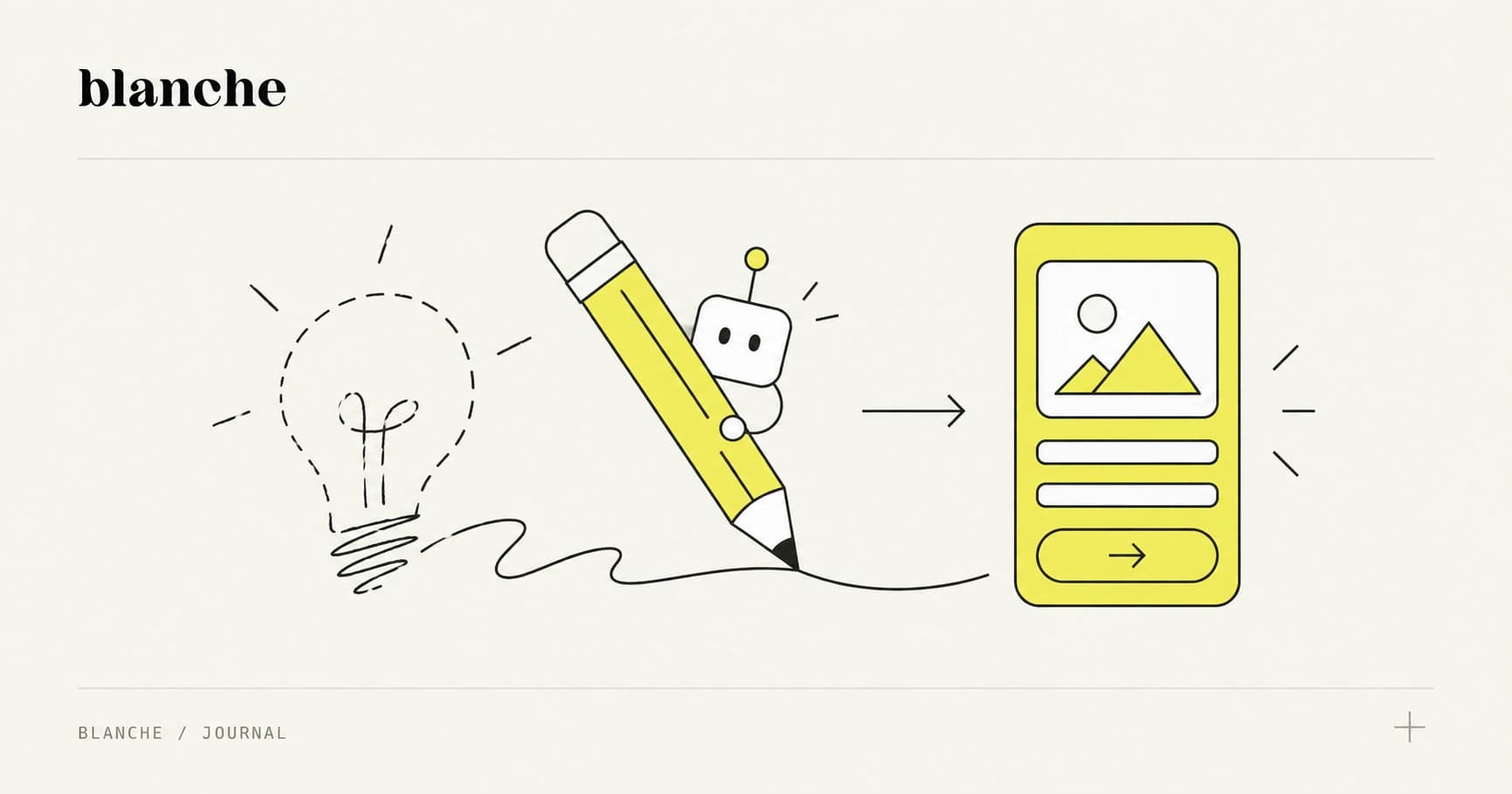
This article lays out a 10-day truth loop: a sprint-based framework for going from a one-line brief to a testable product—using AI for speed while keeping humans accountable for decisions.
If you can’t answer “Who is this for?”, “What pain is urgent?”, and “What would they pay?” by Day 10, you don’t have a venture yet—you have a concept.
Why venture studios need a faster truth loop
Studios don’t lack creativity; they lack decision-grade evidence early.
The best startup writing (think Y Combinator’s emphasis on talking to users, and First Round’s obsession with crisp positioning) converges on one principle: tight feedback loops beat big plans.
AI changes the economics of iteration:
- Research synthesis becomes cheap (but must be verified).
- Copy and UX writing become near-instant (but must be grounded).
- Prototypes become fast (but must be instrumented).
The studio advantage is supposed to be speed + pattern recognition. The risk is speed + rationalization.
Concrete takeaway: treat AI as a compression tool, not a truth tool. Truth comes from users, pricing signals, and observed behavior.
The 10-day sprint plan (with deliverables)
This is a schedule you can run repeatedly across ideas. It’s designed to end with a decision memo that forces a greenlight / pivot / kill outcome.
Day 1: The problem and the “one-line brief” (make it falsifiable)
Goal: turn a vague idea into a falsifiable claim.
Deliverables:
- Problem statement (one paragraph)
- “If we’re right…” hypothesis
- Top 3 alternatives users use today
Human accountability: a studio lead signs off on the hypothesis.
Example hypothesis template:
- “We believe [ICP] struggles with [job-to-be-done] because [root cause]. If we offer [solution], they will [behavior] within [time] and pay [price].”
Do not proceed without a falsifiable behavior. “They’ll love it” is not a behavior.
Day 2: ICP selection and segmentation (pick a narrow wedge)
Goal: choose a specific initial customer profile you can actually reach.
Deliverables:
- ICP spec (role, company type, trigger event, constraints)
- “Not ICP” list (who you will ignore)
- Interview target list (20 names or a sourcing plan)
AI use: generate candidate segments and triggers, but validate with team knowledge.
Studio rule: if you can’t name 20 reachable people, your ICP is fantasy.
Day 3: Competitive scan + positioning draft (earn the right to exist)
Goal: understand the landscape and draft a sharp position.
Deliverables:
- Competitive table (direct, adjacent, “status quo”)
- Positioning v1: category, wedge, differentiation
- 3 messaging angles to test
AI use: summarize websites, docs, and reviews; propose positioning options.
Human accountability: someone must verify claims by checking sources.
Day 4: Prototype scope (define the smallest testable promise)
Goal: design the smallest experience that proves or disproves the value.
Deliverables:
- 2–3 “must-have” flows (e.g., onboarding → first value → share/export)
- Out-of-scope list (protect the sprint)
- Data/events plan (what you’ll measure)
Anti-demo-ware constraint: your prototype must include a moment where the user either:
- gives you something valuable (time, data, workflow change), or
- commits to something (email + specific use case, calendar booking, payment intent)
Day 5: UX copy + onboarding flow (make the value legible)
Goal: turn the positioning into an onboarding that users can understand in 30 seconds.
Deliverables:
- Landing page v1 (headline, subhead, bullets, FAQ)
- Onboarding steps and microcopy
- Empty-state and error-state copy
AI use: accelerate copy variants and tone consistency.
Human accountability: decide which promise you’re making and what you’re not promising.
Great onboarding isn’t “friendly.” It’s specific.
Day 6: Build the testable prototype (instrumented from day one)
Goal: ship a working prototype that captures intent.
Deliverables:
- Live prototype (web app or interactive demo)
- Analytics + event tracking
- A “concierge” fallback (manual steps behind the scenes)
Tooling references:
- Next.js / Remix for fast web builds
- Supabase / Firebase for auth + storage
- Stripe Payment Links or Checkout for pricing probes
- PostHog / Amplitude / Segment for event tracking
- Vercel for deployment
AI use: code scaffolding, component generation, test writing—reviewed by an engineer.
Day 7: Pricing probe (test willingness, not compliments)
Goal: move from “interesting” to “would you pay?”
Deliverables:
- Pricing page v1 (2–3 tiers or one clear offer)
- Payment intent mechanism (waitlist with price, deposit, or checkout)
- Interview script focused on value and budget
What counts as a pricing signal:
- “Yes, I’d pay $X” and they pick a tier and give an email
- They ask about procurement / security
- They offer to introduce you to a budget holder
What doesn’t count:
- “Seems fair”
- “We’d consider it”
Day 8: Interviews + live prototype sessions (watch them use it)
Goal: observe real confusion, real desire, real friction.
Deliverables:
- 8–12 user conversations (recorded notes)
- 3–5 prototype walkthroughs with screen share
- Pattern summary: top pains, objections, “aha” moments
Studio rule: at least half of sessions must be with your exact ICP, not “close enough.”
The most valuable user feedback is not what they say—it’s what they try to do next.
Day 9: Landing test + distribution experiment (does the message pull?)
Goal: validate demand and positioning with lightweight distribution.
Deliverables:
- Two landing variants (A/B or sequential)
- One distribution channel test (cold outbound, partner newsletter, niche community, targeted ads)
- Results dashboard (intent metrics)
Examples of channel tests:
- 50–100 targeted cold emails with a clear CTA (book a call / try prototype)
- Small-budget LinkedIn ads to ICP job titles
- Posting in a niche Slack/Discord where your ICP already lives
Day 10: Decision memo (greenlight, pivot, or kill)
Goal: make a decision based on evidence, not vibes.
Deliverables:
- 1–2 page decision memo
- Updated hypothesis
- Next sprint plan or kill/pivot rationale
Decision memo template:
- ICP + trigger event
- Problem severity evidence (quotes + patterns)
- Prototype usage evidence (events + recordings)
- Pricing evidence (what people accepted/rejected)
- Risks (tech, distribution, compliance)
- Recommendation: greenlight / pivot / kill
AI workflows that accelerate without breaking accountability
LLMs are best used as a high-output collaborator with clear boundaries:
- AI can draft, expand, compare, summarize, and suggest.
- Humans must choose, verify, and own the tradeoffs.
Below are practical workflows venture studios can standardize.
AI workflow 1: Research synthesis (with citations and checks)
Use AI to summarize:
- competitor positioning and pricing pages
- G2/Capterra reviews (pain points)
- Reddit/HN threads (language users use)
- internal notes from prior studio projects
Prompt pattern (research brief):
- “Summarize the top 5 pain points mentioned by [ICP] about [category]. Quote sources. Separate ‘facts’ from ‘interpretations.’”
- “List the top 10 alternatives including spreadsheets, agencies, and internal tools.”
- “Propose 3 wedges and explain why each could win.”
Accountability check: assign one person to verify the top 10 claims by clicking sources.
AI workflow 2: Positioning and messaging variants (testable, not poetic)
You want messaging that is:
- concrete (what it does)
- scoped (for whom)
- differentiated (why now)
Prompt pattern (positioning options):
- “Generate 5 positioning statements for [ICP] with the constraint that each includes: trigger event, promised outcome, and time-to-value. Avoid jargon.”
Then ask:
- “For each option, list the implied objections and how we’d answer them.”
AI workflow 3: Onboarding flow + UX microcopy (reduce cognitive load)
LLMs are excellent at:
- empty states
- error messages
- tooltips
- step-by-step onboarding copy
Prompt pattern (onboarding):
- “Design a 4-step onboarding for [ICP]. Each step must: (1) ask for minimal input, (2) explain why we need it, (3) lead to a visible output.”
Human accountability: product lead decides the “activation moment” (first value) and ensures onboarding drives to it.
AI workflow 4: Help content and support macros (ship credibility)
Early-stage products feel risky. Good help content reduces perceived risk.
Generate:
- “How it works” page
- security + privacy FAQ (honest and scoped)
- troubleshooting guides
- customer support macros
Prompt pattern (help center):
- “Write a help article for [feature] for [ICP]. Include: steps, screenshots placeholders, common errors, and when to contact support.”
AI workflow 5: Rapid build scaffolding (with guardrails)
Use AI to:
- scaffold Next.js routes and UI components
- generate TypeScript types
- write basic unit tests
- draft PostHog event names and properties
Non-negotiable guardrails:
- an engineer reviews all code
- secrets and auth are handled properly
- logging avoids sensitive data
AI can write code fast. It can also write security bugs fast.
Validation that avoids vanity metrics
Studios love dashboards. The problem is that early dashboards often measure activity, not intent.
Instrument for intent: what to track in early prototypes
Track events that indicate real demand:
- Activation: user reaches first value (not just signup)
- Repeat intent: user returns within 48–72 hours
- Workflow depth: user completes a meaningful sequence (e.g., import → generate → export)
- Commitment: user connects a real system (calendar, CRM, repo) or uploads real data
- Payment intent: clicks “Start trial” on a priced plan, attempts checkout, or leaves deposit
Avoid over-weighting:
- page views
- time on page
- generic waitlist signups
Interviews that produce decisions, not anecdotes
A good interview is a guided search for:
- urgency
- existing spend
- switching costs
- decision process
High-signal questions:
- “Walk me through the last time this happened.”
- “What did you do instead?”
- “What did it cost you—time, money, risk?”
- “Who signs off on buying a tool like this?”
- “If we could solve it tomorrow, what would you expect to pay?”
What you’re listening for:
- specificity (named tools, recent incidents)
- emotion (stress, embarrassment, deadlines)
- budget language (headcount, contractors, existing SaaS)
Landing tests and pricing probes that mean something
A landing page is not validation unless it has a strong CTA:
- Book a call
- Start a trial
- Join waitlist with a stated price
- Put down a refundable deposit
Tools that make this easy:
- Webflow / Framer for fast landing variants
- Stripe for pricing probes
- Calendly for scheduling
- PostHog for funnel tracking
Kill criteria: when to stop or pivot (before sunk cost wins)
Studios need explicit kill criteria because studios are good at “making it work.” That’s a superpower—until it isn’t.
Kill signals (strong reasons to stop)
Kill or hard-pivot if, by Day 10:
- No urgent pain: users describe it as “nice to have,” not tied to deadlines, revenue, or risk.
- No clear buyer: the user isn’t the decision-maker and can’t route you to one.
- No willingness to switch: they agree it’s useful but won’t change behavior or integrate.
- Pricing fails repeatedly: multiple ICP users reject even low-end pricing and can’t articulate a scenario where they’d pay.
- Distribution is implausible: you can’t find a repeatable channel, and outbound response is near-zero with a sharp message.
- Moat is imaginary: the value is easily replicated and you lack a credible wedge (data, workflow, distribution, brand).
Pivot signals (reframe, don’t restart)
Pivot when:
- the pain is real but the user is different than expected
- the workflow is right but the promised outcome is wrong
- pricing is viable but packaging is off (seat-based vs usage-based)
A good pivot keeps the evidence and changes the assumption.
Conclusion: Build faster, but don’t let AI negotiate reality for you
AI prototyping is a force multiplier for venture studios—especially for research synthesis, UX copy, and rapid builds. But the studio’s real job isn’t producing artifacts. It’s producing correct decisions.
If you adopt this 10-day sprint, you’ll ship less demo-ware and more decision-grade learning:
- A falsifiable hypothesis
- A reachable ICP
- A prototype that measures intent
- Pricing signals you can act on
- A memo that forces greenlight, pivot, or kill
Want a reusable sprint kit?
If you’re running a studio and want this turned into a repeatable operating system—interview scripts, decision memo template, event taxonomy, and prompting workflows—we can package it into a studio-ready playbook and help you run the first sprint end-to-end.